How to Optimize Your Website for AI Search Results
Last updated: October 15, 2026
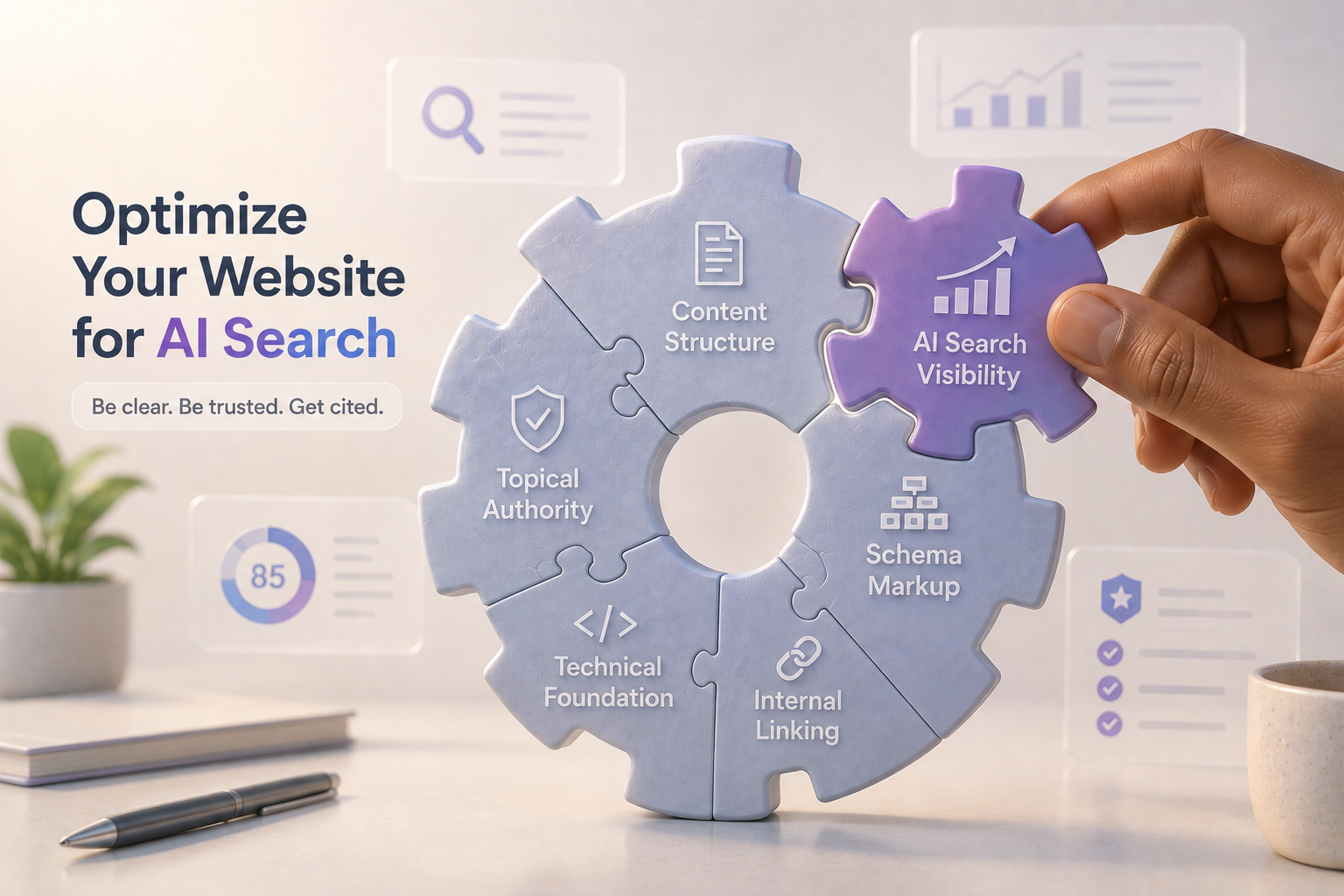
Table of Contents
AI search engines do not work like traditional search. ChatGPT, Perplexity, and Google's AI Overviews synthesize answers from multiple sources, and they choose which sources to cite based on clarity, authority, and structure. A page can rank well in organic results and still never appear in an AI-generated answer. To optimize your website for AI search means understanding what makes a page easy for a machine to read, trust, and reference.
This guide covers the specific steps you can take today, from content structure to technical SEO to schema markup, so your site is positioned to earn citations in the AI search landscape.
Why AI search optimization is different
Traditional SEO focuses on ranking a single page for a single query. AI search works differently. When someone asks ChatGPT or Google AI Overviews a question, the system reads across the sources it retrieves, evaluates which ones answer the question most directly, and synthesizes a response. It then attributes claims to specific sources.
This means the rules are different. You are not competing for a position on a list. You are competing to be the source an AI engine trusts enough to cite. That trust comes from three things: topical depth across your site, clear page structure that makes extraction easy, and a technical setup that lets a crawler reach the page at all. When you optimize your website for AI search these three factors determine whether your content gets cited or ignored.
Build topical authority, not just keyword rankings
AI engines retrieve individual pages, but the rest of your site is what makes any one page look worth citing. A single blog post can still go uncited if nothing else on your site supports it. To build topical authority:
Cover the full topic. If you write about keyword research, also cover search intent, keyword clustering, long-tail strategy, and competitor analysis. Each page strengthens the others.
Close content gaps. Use CrawlTide's content gap analysis to compare your keyword coverage against competitors. Those gaps are queries you have no page to compete for, so anything cited there comes from someone else.
Publish supporting content. How-to guides, comparison pages, and explainers all reinforce your authority on a topic. A well-linked cluster of related content signals depth that AI systems reward.
Structure your pages for AI extraction
AI engines need to pull a specific answer from your page and attribute it. Pages that bury their answers in long paragraphs or vague introductions make that harder. Structure your content so the answer is easy to find:
Lead with the answer. Put a clear, direct answer to the page's target question in the first paragraph or immediately after the relevant heading. AI systems favor pages where the answer appears early.
Use descriptive headings. Each H2 and H3 should describe what the section actually covers. "Key Considerations" tells a machine nothing. "How schema markup helps AI search visibility" tells it exactly what to expect.
Answer real questions directly. Question-and-answer structure is the easiest format for an AI to parse. Use the actual questions your audience asks as headings, and give a complete answer in the first sentence or two underneath. You can use CrawlTide's AI Answer Readiness Checker to score how well a page is structured for AI extraction.
Keep paragraphs short. Dense blocks of text are harder to extract from. Short paragraphs with one idea each are easier for both humans and machines to process.
Fix the technical foundation first
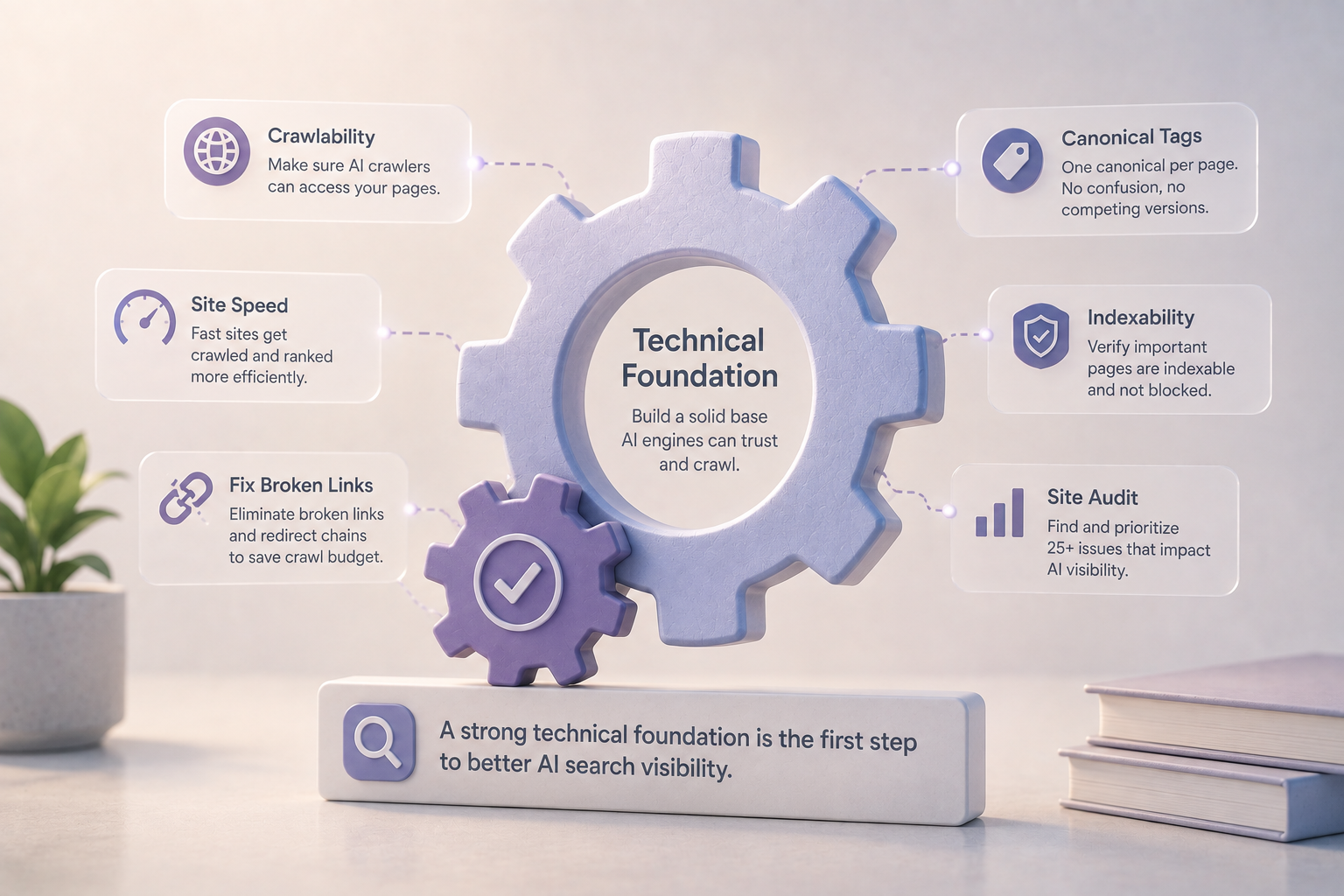
None of the content-level optimizations matter if AI crawlers cannot access your pages. Before working on content structure, make sure the basics are solid:
Crawlability. Ensure your pages are not blocked by robots.txt or noindex tags. Use the Indexability Checker to verify that your key pages are accessible.
Site speed. Slow pages get deprioritized by crawlers. CrawlTide's site audit flags pages with high load times so you can fix them before they affect visibility.
Broken links and redirect chains. Both waste crawl budget and signal neglect. Fix broken internal links and collapse redirect chains to keep your site technically clean.
Canonical tags. Duplicate or conflicting canonicals confuse search engines about which version of a page to index. Set one canonical per page and make sure it points to the right URL.
CrawlTide detects issues across five categories (errors, indexability, content, links, and technical) with 25+ issue types, so you can prioritize fixes based on actual impact rather than guesswork.
Add schema markup to clarify your identity
Schema markup (JSON-LD) gives AI engines structured data they can read with confidence instead of inferring from your HTML. The most important types for AI search visibility are:
Organization schema. Declares your brand name, URL, logo, and social profiles. This helps AI engines associate your content with a known entity.
WebSite schema. Ties your site to your organization and describes its structure. See our guide on how WebSite schema helps AI and search understand your site.
Article and FAQPage schema. Marks up your content with structured types that AI engines can parse directly. FAQPage no longer earns rich results in Google (Google limited them to government and health sites in 2023 and stopped showing them for every site on May 7, 2026), but it still hands AI engines clean question-and-answer pairs to lift, so it is worth keeping on genuine FAQ pages.
BreadcrumbList schema. Shows where a page sits in your site hierarchy, helping AI engines understand context and relationships between pages.
You can check what schema your pages already have with the free Schema Markup Checker, and track schema changes over time with CrawlTide's schema history tracking.
Strengthen internal linking
Internal links do more than help users navigate. They tell AI engines which pages are related and how your content connects. A page about "keyword research" that links to your pages on "search intent," "keyword clustering," and "content gaps" builds a web of topical evidence that AI systems can follow.
Focus on:
Linking related content together. Every page on a topic should link to other pages on the same topic. Orphan pages with no internal links are harder for AI crawlers to discover and contextualize.
Using descriptive anchor text. "Click here" tells a machine nothing. "Learn how to close content gaps" tells it exactly what the linked page covers.
Auditing your link structure. CrawlTide's Internal Link Opportunity Finder analyzes your pages and identifies where adding links would strengthen topical connections.
Measure your AI visibility
You cannot optimize what you do not measure. Traditional rank tracking shows where you appear in search results, but it does not tell you whether AI engines are citing your content.
CrawlTide's AI Visibility tracking monitors whether your brand appears across ChatGPT, Claude, Gemini, Perplexity, and Google AI Overviews. It tracks visibility across specific keywords and prompts, showing you which pages are being cited and which are being ignored. The AI Readiness Score evaluates 12 factors (including E-E-A-T signals, structured data coverage, and content clarity) to give you a concrete measure of how ready your site is for AI citation.
Start with the free AI Visibility Check to get a baseline score, then use the full tracking dashboard to monitor changes over time as you implement the optimizations in this guide.
Start with what matters most
You do not need to do everything at once. Start with the highest-impact changes:
Run a site audit to fix technical blockers (broken links, missing canonicals, slow pages).
Add Organization and WebSite schema if you do not have them yet.
Restructure your top pages so answers appear early with clear headings.
Close content gaps by covering subtopics your competitors already rank for.
Check your AI visibility score to establish a baseline and track progress.
Each step helps you optimize your website for AI search in a way that compounds over time.
AI search is still evolving, but the fundamentals are clear: sites that are technically sound, topically deep, and structurally clear are the ones that get cited. The sooner you start optimizing for this shift, the further ahead you will be when it becomes the default way people search.
Sign up for CrawlTide to start tracking your AI visibility and fixing the issues that hold your site back from AI search citations.
CrawlTide Team
The CrawlTide Team builds AI-powered SEO tools that help businesses improve their search visibility and earn citations in AI-generated results.
Suggested Reading

Should You Add an llms.txt File? What It Does and When It Pays Off
llms.txt is an emerging file that maps your best pages for AI engines. What it does, who actually honors it today, and how to write one in an hour.
7 min read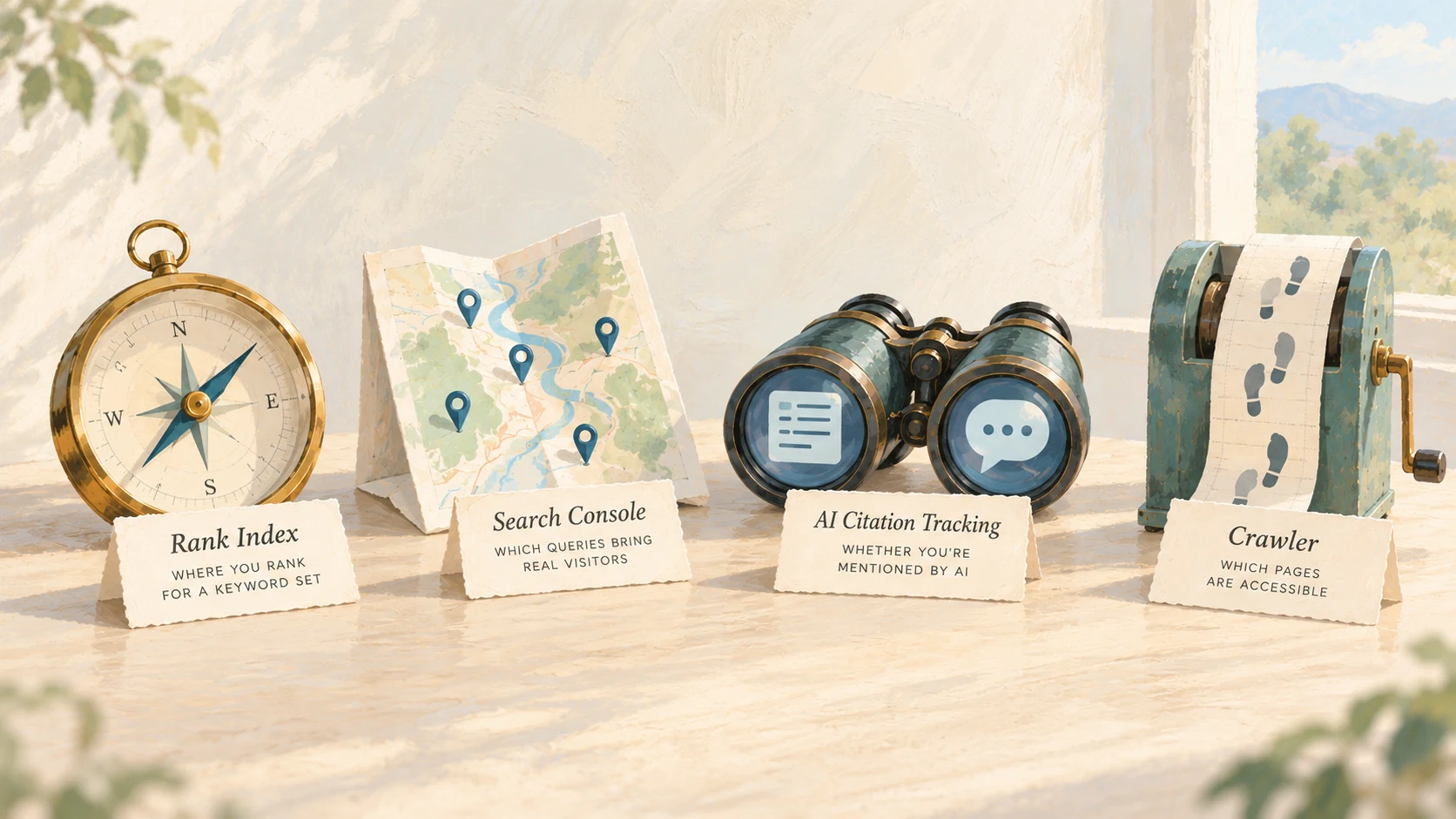
Which SEO Visibility Tool Do You Need? Four Kinds, Compared
Search Console, rank-tracker visibility scores, AI visibility trackers and site crawlers all report "visibility", but they measure different things. Here is how each number is built and how each one misleads you.
8 min read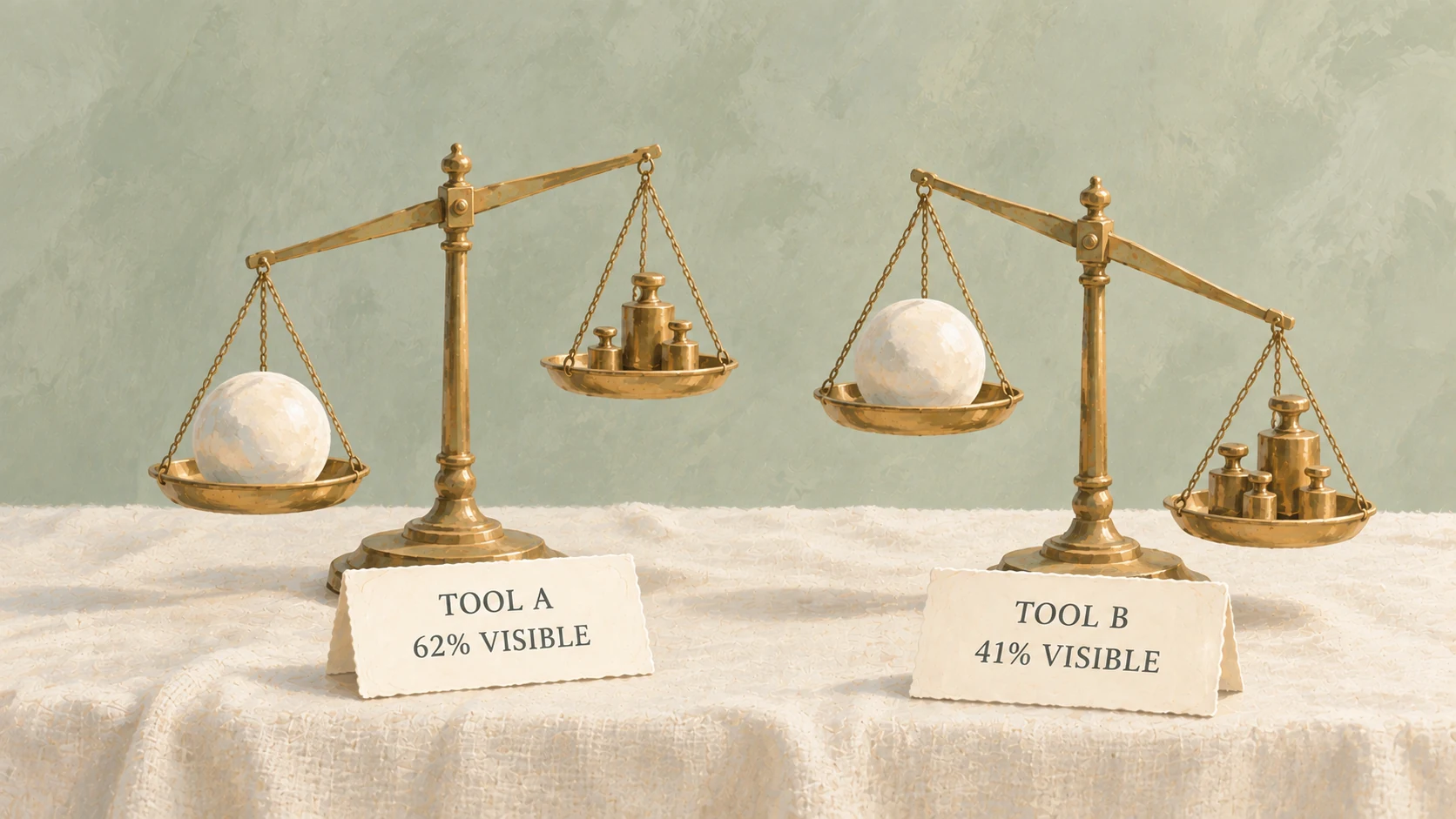
What a Search Engine Visibility Tool Actually Measures (and Why Two Tools Disagree)
Google never publishes a visibility score. Each vendor calculates its own from rank, a private click curve and search volume. Here is the math, why two tools disagree, and the four causes of a drop.
7 min read